
If you’ve happened to take a quick scroll through LinkedIn or checked out a popular SEO site in recent months, you might have seen a disturbing rise in the frequency of typos. It seems nowadays, everyone is hitting the A key by mistake when they type SEO!
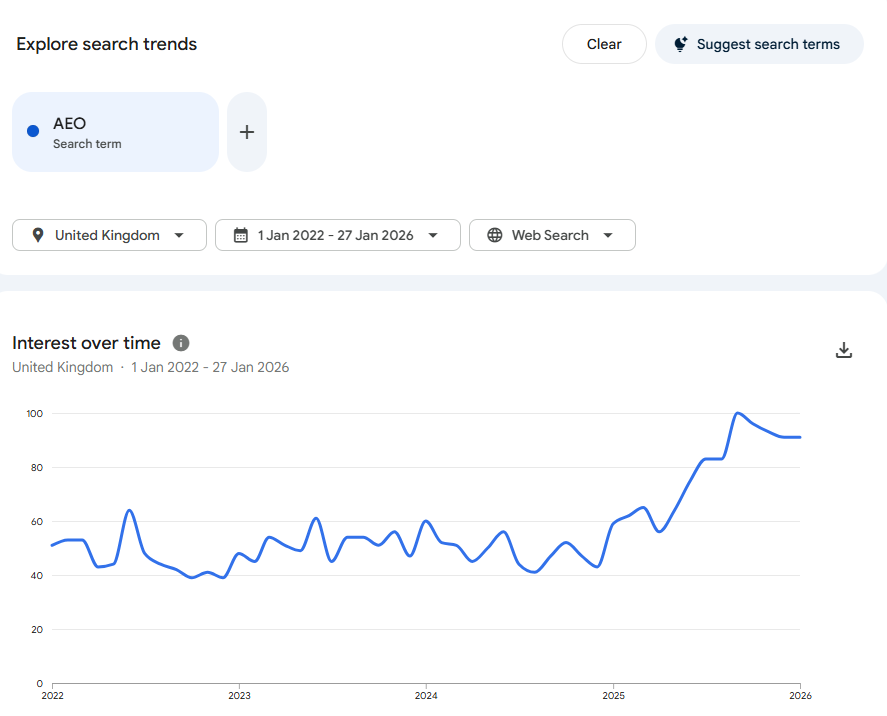
Well, if you’d slowed down that scrolling finger for a moment you’d know there’s no need for alarm. Autocorrects around the world have not broken overnight. However, it sure feels like the search industry might nowadays!
So, what is this “AEO”, also known as Answer Engine Optimisation? How does it relate to SEO, and more importantly, the marketing of your business? How will this new term affect digital marketing as a whole? Are we looking at a new buzzword, or a job title we should all get used to hearing around the office? Read on for our take.
Answer Engine Optimisation Explained
AEO is still somewhat new as a term, so its exact scope and meaning is still in flux (seriously, what even is an “answer engine”?), but right now the term is starting to be used for those in digital marketing who are handling a brand/client’s visibility in AI-generated search results, such as Google’s AI Overviews and Perplexity. This task typically falls upon the resident SEO expert at a business, hence the similar naming.
What Does AEO Involve?
At the moment, that’s not exactly clear either, but what IS clear is that it’s something marketers and businesses alike need to figure out fast. When trying to make a brand appear in AI search results at the minute, best practice is loosely defined as the following:
- Solid SEO Foundation: Pages that rank well traditionally, tend to rank well in the new frontier as well. Aim for solid SEO first, and good AEO should be a natural consequence.
- Provide Genuine Value: No more keyword stuffing. If an AI is going to use your content in an answer, it needs to provide genuine value to a user. Your content has to be informative and something your site can speak with authority on.
- Be Easily Accessible: AI tools can only recommend what they can read, so make sure every page you want recommended can be crawled and indexed. An llms.txt file takes minutes to add, but it’s not where the gains are. Product data, page content and reviews do far more of the work.
Does my Business Need AEO?
If you sell online, increasingly yes. More shoppers now ask ChatGPT, Gemini or Google’s AI Mode what to buy, and those answers name a handful of brands. If yours isn’t one of them, you never knew that sale existed. What gets you named comes down to three things: your product data, your reviews and what other sites say about you.
Best practice is still settling, and nobody can promise what an AI tool will say, so be wary of anyone who guarantees a recommendation. ChatGPT ads also went live in the UK in June 2026, but they sit separately from the answer, so they can’t buy you a place in the recommendation itself.
The good news is that most of the work builds on things you should be doing anyway: strong SEO, clean product data and a steady flow of reviews. The best place to start is to ask ChatGPT and Google’s AI Mode the questions your customers ask, and note who gets recommended. That’s your baseline.
Hopefully you can now scroll through the marketing corners of social media knowing exactly what that extra A is doing there. If you’d rather someone handled AEO for your store, it’s part of our AI SEO work, run by our team alongside your SEO, ads and email. Get in touch and we’ll show you what ChatGPT says about your brand today.