
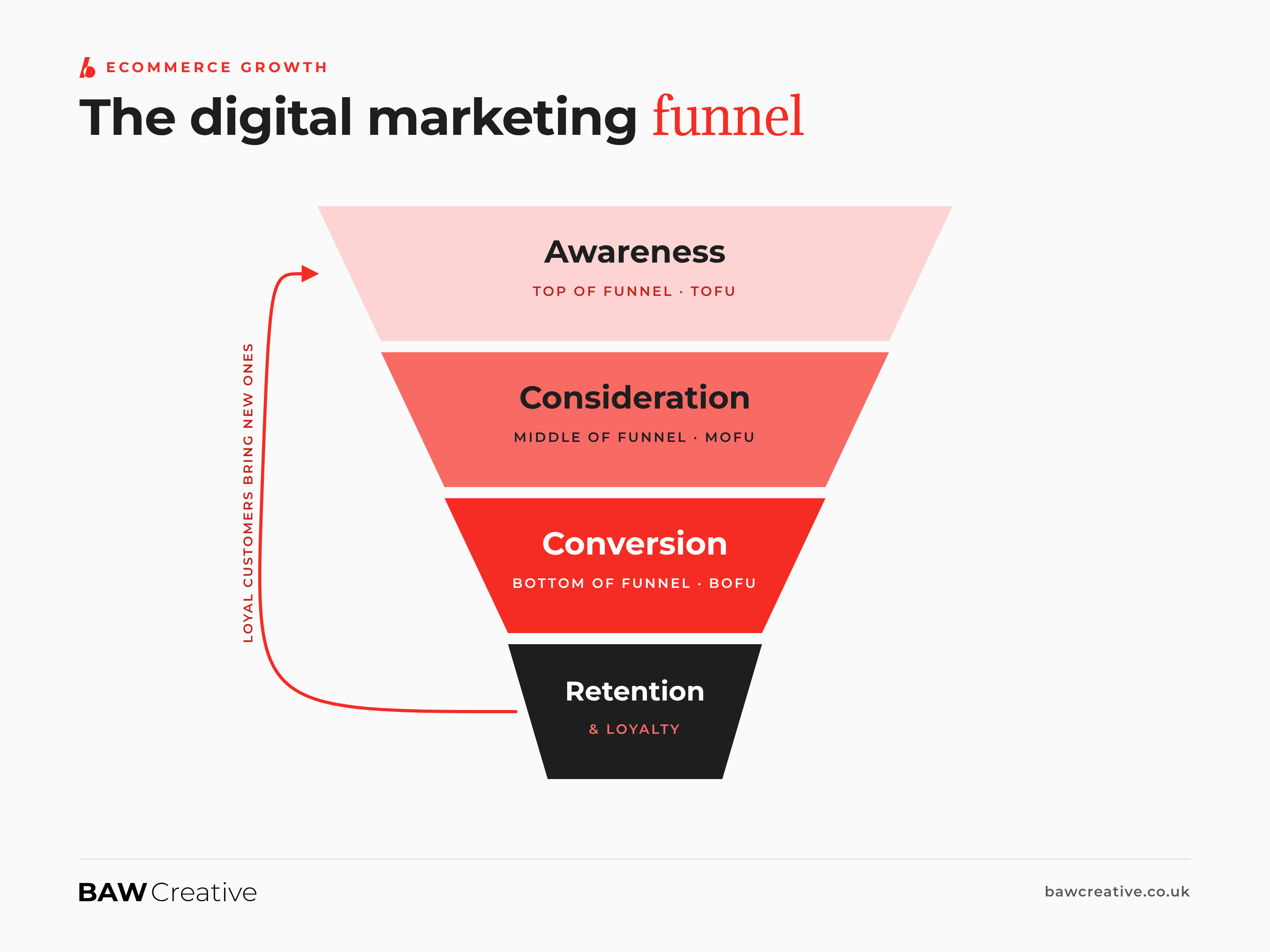
A digital marketing funnel is a model that maps the customer journey, from their very first impression of your brand to eventually buying from you.
Each of your customers will go on a buying journey before they purchase from you. Having a clear strategy for that journey, and how it links to buying intent, is what separates a strong funnel from a weak one.
In this guide, we'll explain how a digital marketing funnel works, the four key stages, and why it matters for eCommerce.
How Does A Digital Marketing Funnel Work?
A digital marketing funnel works like a pipeline, where customers enter at the top of the funnel and move through to the bottom as they get more likely to buy.
The top of the funnel is the widest because it’s where you reach the most people. At this stage, the aim is simply to make as many of the right people as possible aware of what you sell.
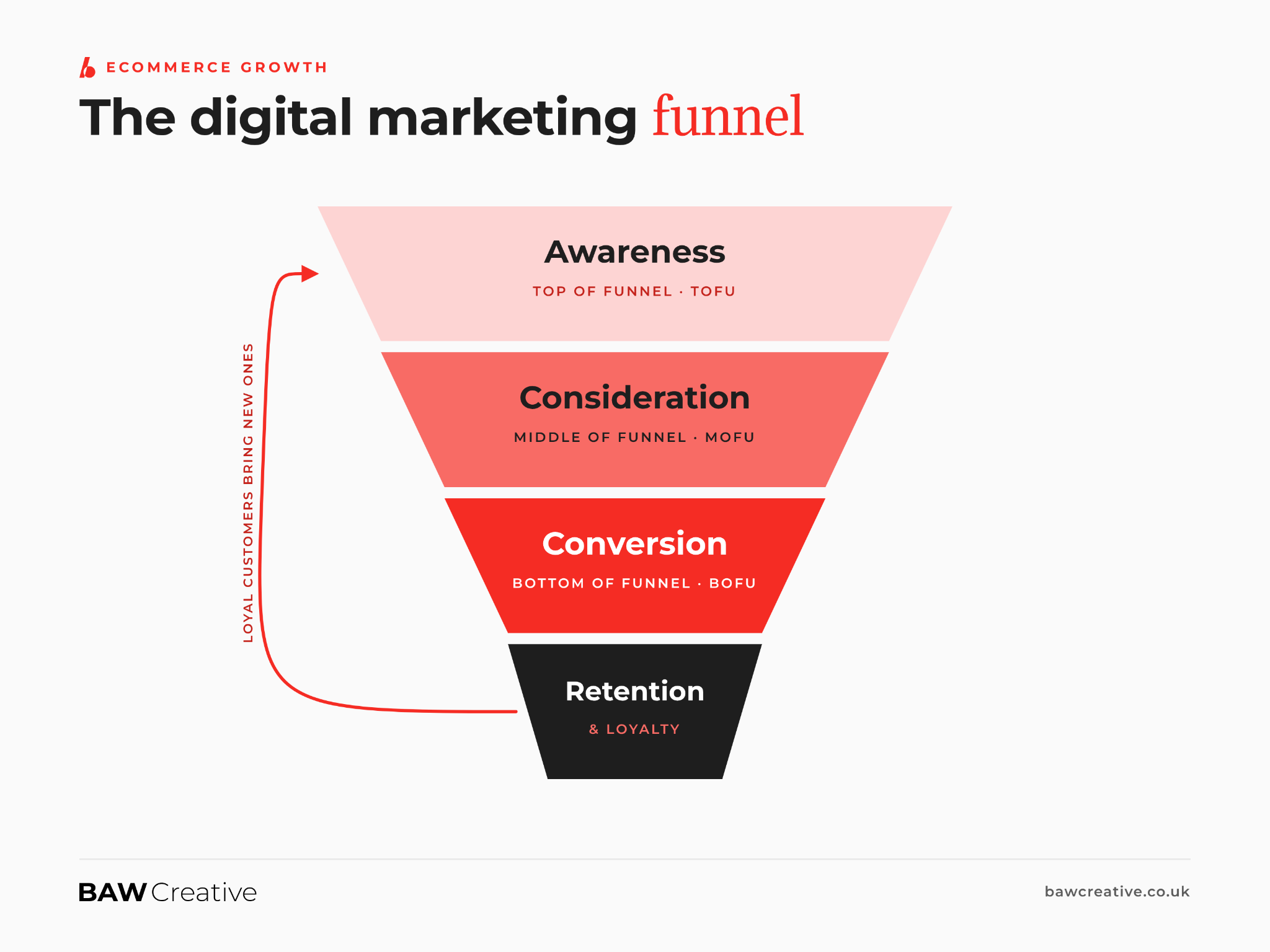
Most customer journeys begin at the awareness stage. For instance:
- Users are shown an ad for your product on social media. This first time, they don’t show any interest.
- They’re shown the ad again and they click to find out more.
- They add the product to their basket but don’t purchase it.
- You send them an abandoned cart email with a reminder of what they left behind, and they complete the purchase.
A shopper who had never heard of your brand became a customer because they were nurtured through the funnel.
It’s not always a linear funnel
It’s important to know that customers don’t always follow a linear path down the funnel. Some purchases can take dozens of touchpoints before a customer is ready to buy. Users go back and forth between stages, switch platforms, and often mix online and offline research along the way.
That’s why each stage of your digital marketing funnel needs a clear plan. Every stage should have:
- A goal: what you want the customer to do or feel at this point.
- Tactics: the channels and content you’ll use to reach and connect with your audience.
- KPIs: the numbers that show whether the stage is working and how you’ll know if it’s not.
What Are The Stages Of A Digital Marketing Funnel?
There are four stages to a digital marketing funnel:
- Awareness
- Consideration
- Conversion
- Retention
1. Awareness (Top of Funnel / TOFU)
The first step of the funnel is designed to attract the right type of customers. This stage is about building awareness so that your brand is in the right places at the right time.
Your goal should be to make a strong first impression, so that you can be remembered when they see your brand again. You can use channels such as paid social ads, SEO-optimised blog content, influencer partnerships and short-form video on TikTok and Instagram Reels to create this first interaction.
Valuable KPIs to track are reach and traffic; the higher the numbers, the more people you’ve successfully made aware of your brand.
2. Consideration (Middle of Funnel / MOFU)
Users have seen your brand before. Now you need to give them a reason to buy from you. Buyers at this stage will typically be comparing your product against your competitors. They’ll be weighing up quality, value and which brand they trust most.
You can create product comparison guides to encourage users to choose your offering, design email sign-up incentives (such as discounts), and showcase strong customer reviews.
Key KPIs for the consideration stage include:
- Time on site: longer sessions indicate people are interested
- Email sign-ups: sign-ups show the user trusts your brand
- Product page views: suggests users are comparing options and are closer to buying
3. Conversion (Bottom of Funnel / BOFU)
When users make it to the bottom of the funnel, your goal is to secure the purchase. Active interaction with your email flows and site browsing indicates strong buying intent, and all that’s left is to give a final push to complete their order.
Abandoned cart emails can work well, as they act as a reminder nudge. You can retarget the audience in the consideration stage of the funnel with ads and limited offers. Other ideas to encourage conversion are free delivery and discounts accessible through email.
Measuring success at the bottom of the funnel can be straightforward, as you can track conversion rate, cart abandonment rate and average order value (AOV).
Equally, you can investigate why users drop off at the conversion stage. Ask your team questions like:
- Which part of the buying process causes most friction?
- Are there too many stages to the checkout process?
- Where are we losing most of the shoppers?
4. Retention & Loyalty
Once you’ve got the purchase, what needs to happen next?
Winning a new customer costs far more than keeping an existing one, so you can’t afford for them to buy once and never return. You need to focus on building loyalty with your customers so they return and buy again!
Great ways to drive retention include:
- Post-purchase email flows
- Loyalty schemes
- Personalised recommendations
- Review requests
- Referral programmes
Email marketing is a valuable channel to use for retention purposes, with simple ways to track click through rates and discount code usage. You can also measure success through repeat purchase rates and customer lifetime value (CLV).
Why Is A Digital Marketing Funnel Important For eCommerce?
A huge part of digital strategy is knowing what is working well for your brand, and what isn’t. Having a marketing funnel can help you understand which part of your process is letting you down. Here are a few examples of why a funnel is so important:
Shows where you're losing customers
By mapping every part of the customer journey to a funnel stage, you can see exactly where shoppers drop off.
More effective ad spend
Tracking customer journeys helps inform where ads are best used. This means you can put ad spend on the stages that need it most.
More relevant messaging
You can align your content to buyer intent, and for every stage of the journey. For example, writing top-level blogs to answer simple user questions will introduce them to your brand; this would be part of your ‘awareness’ stage.
Higher conversion rates
There is a clear process for how customers will interact with your brand before they buy from you. You can make sure there are no gaps in the journey, and prepare for non-linear engagement. When there are no gaps in the journey, fewer shoppers drop off before buying.
Data-led decisions
If every stage has its own KPIs, you can see what’s working. You can test changes and make decisions based on data, instead of guessing.
Final Thoughts
A well-planned digital marketing funnel is the difference between losing customers without knowing why, and knowing exactly where to plug the gaps.
Don’t settle for scattered marketing. Instead, build a joined-up customer journey that has clear goals, KPIs, and ways to reach the right audiences.
If you’re losing customers mid-funnel or feel like your customer journey isn’t as strong as it could be, get in touch with the BAW Creative team. We help eCommerce brands become impossible to ignore. Let’s make yours next.