
46% of all websites use Google Tag Manager, making it one of the most widely used tag management systems in the world. For businesses investing in SEO, PPC, ecommerce or analytics, GTM has become a core part of managing website tracking more efficiently.
As businesses rely more heavily on analytics and conversion tracking, managing tags efficiently has become increasingly important.
In this guide, we’ll cover Google Tag Manager in simple terms, including what it does, why businesses use it, how it works and how beginners can get started properly. If you’re new to analytics or website tracking, this article will help with Understanding Google Tag Manager without overcomplicating the process.
What Is Google Tag Manager and What Is It Used For?
Google Tag Manager, often shortened to GTM, is a free tool from Google that allows businesses to add and manage tracking codes on a website without manually editing the website code every time.
These tracking codes are known as tags. They collect information about how users interact with your website and send that data to platforms such as Google Analytics, Google Ads or Meta Ads.
Before GTM became widely used, marketers often had to ask developers to manually install tracking scripts whenever they wanted to measure something new. Even relatively small changes, such as tracking a button click or setting up a conversion, could take time to implement.
Google Tag Manager simplifies this process by acting as a central management system for tracking and analytics scripts. Once the GTM container is installed on a website, marketers can add, update and test many types of tracking without needing direct access to the site’s codebase.
Businesses use Google Tag Manager for a wide range of purposes, including pageview tracking, conversion tracking, ecommerce tracking, user behaviour analysis and remarketing.
For businesses investing in SEO, PPC or digital marketing campaigns, Understanding Google Tag Manager can make tracking much more accurate and easier to manage long term.
Google Tag Manager vs Google Analytics: What’s the Difference?
A common mistake beginners make is assuming Google Tag Manager and Google Analytics are the same tool.
They are closely connected, but they perform different roles.
Google Analytics is a reporting platform. It collects and organises data about website users, including traffic levels, pageviews, conversions and user behaviour.
Google Tag Manager is a tag management platform. Its role is to control the tracking scripts that send data into Google Analytics and other marketing tools.
A simple way to think about it is this:
Google Tag Manager handles the setup of tracking, while Google Analytics handles the reporting and analysis of that data.
For example, if you want to track when users click a contact form button, GTM can detect the click and send that information into GA4. Google Analytics then records the event and displays it in reports.
Without GTM, businesses would usually need developers to manually add tracking scripts into the website every time new tracking was required.
Why Businesses Use Google Tag Manager
Faster tracking implementation
One of the biggest reasons businesses use GTM is speed. Marketing teams regularly need to update tracking, launch campaigns or test new platforms. Without GTM, these changes often rely on developers, which can delay implementation.
Google Tag Manager gives marketers more flexibility by allowing many tracking changes to be handled inside the platform itself. This reduces delays and helps businesses react more quickly to campaign performance and reporting needs.
Centralised tag management
As websites grow, tracking setups can become difficult to manage. Scripts may end up spread across multiple files, plugins and third-party tools, which increases the risk of errors and duplicated tracking.
GTM keeps tags in one place, making it easier to manage updates, remove outdated scripts and maintain cleaner tracking setups.
This is especially useful for businesses running multiple advertising channels and analytics platforms at the same time.
Easier event tracking
Modern marketing relies heavily on understanding user behaviour, not just traffic numbers. Businesses want to know how users interact with forms, buttons, videos, downloads and checkout journeys.
Google Tag Manager allows these interactions to be tracked more efficiently, helping businesses build a clearer picture of how users move through the website.
Without GTM, much of this tracking would require developer support and custom coding.
Built-in testing and debugging
One of the most useful features inside GTM is Preview Mode.
Before publishing tracking changes live, users can test tags to confirm they are firing correctly and sending accurate data. This reduces the chances of broken tracking setups or inaccurate reporting.
The built-in debugging tools also make troubleshooting much easier for marketers and analysts working on analytics implementations.
Ready-made tag templates
Google Tag Manager includes built-in templates for many popular marketing and analytics platforms.
This means users can often set up tracking for Google Analytics 4, Google Ads or Meta Pixel without needing advanced coding knowledge.
These templates simplify implementation and help reduce setup mistakes, especially for beginners learning Understanding Google Tag Manager for the first time.
How Google Tag Manager Works
At first glance, GTM can appear technical, but the platform becomes much easier to understand once you learn the three core components that power it: tags, triggers and variables.
Tags, triggers and variables explained
Tags are pieces of code that collect and send information to platforms such as Google Analytics or Google Ads. A tag could record a pageview, conversion, purchase or user interaction.
Triggers determine when a tag should activate. For example, a trigger may fire when someone visits a page, clicks a button or submits a form.
Variables provide additional information that tags and triggers use during tracking. This could include the page URL, transaction value, click text or product name.
Together, these elements create a flexible system that allows businesses to collect detailed behavioural data without manually editing website code for every new tracking requirement.
Learning how tags, triggers and variables work together is one of the most important parts of Understanding Google Tag Manager because they form the foundation of every GTM setup.
How to Set Up Google Tag Manager
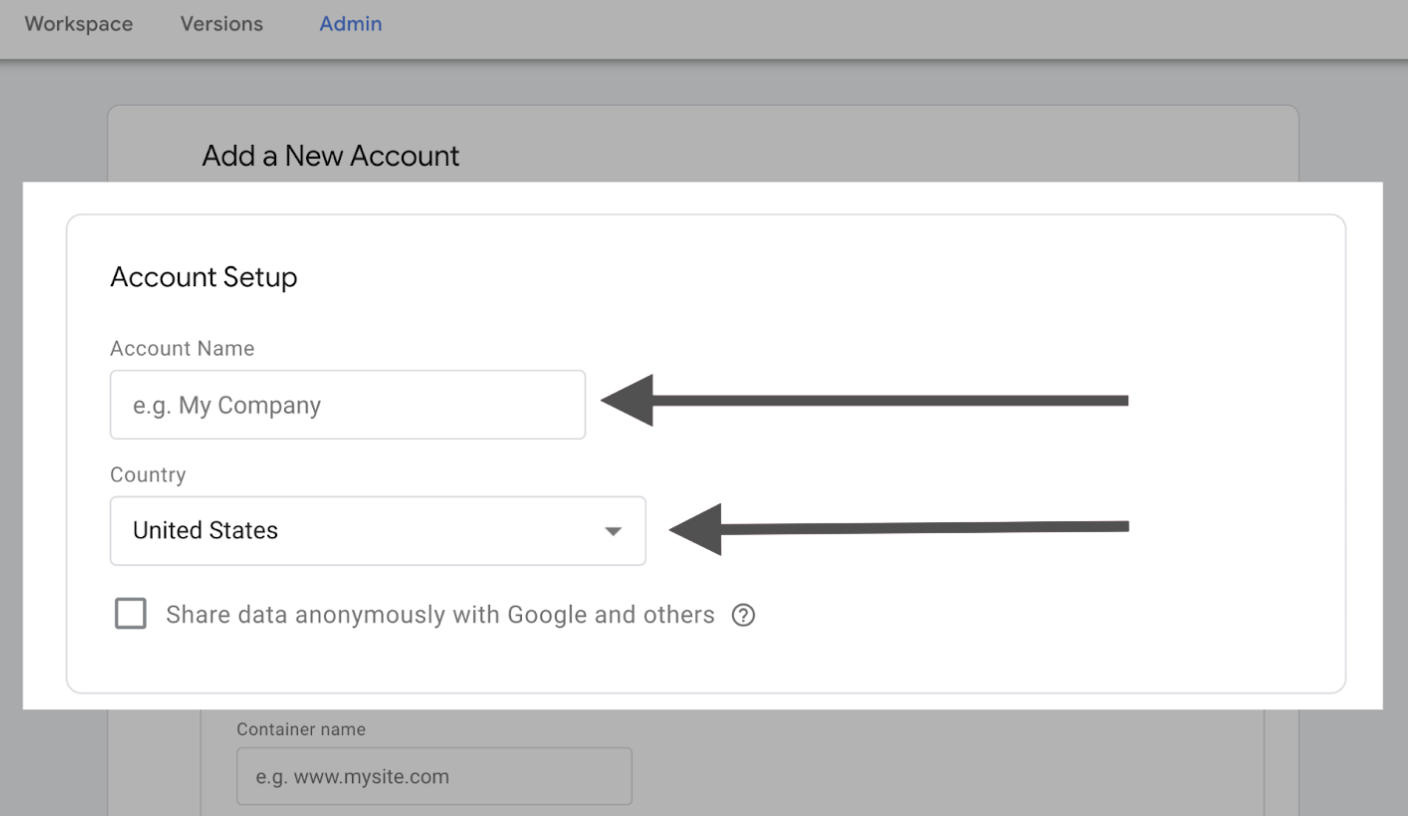
Create a GTM account
The first step is creating a GTM account using your Google login. Inside the account, you then create a container for your website.
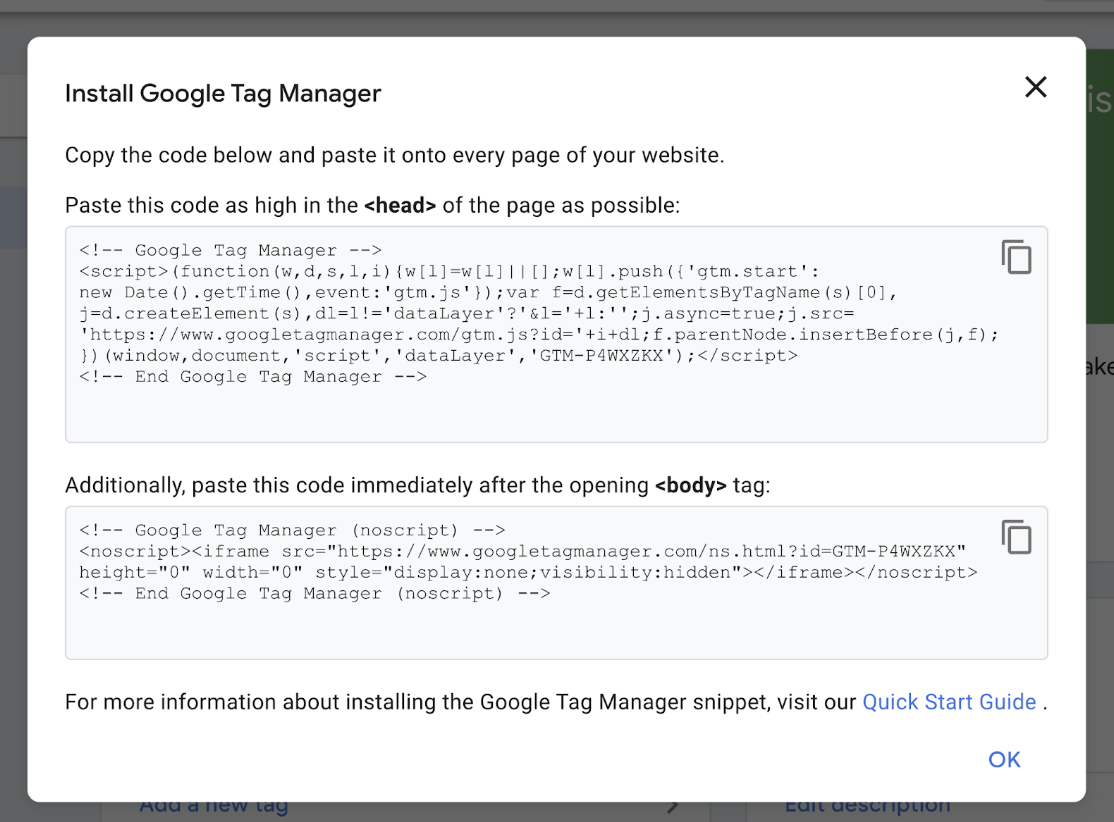
Most businesses use one account for the organisation and one container per website. Once the container is created, Google provides the installation code snippets needed for setup.
The setup process inside Google Tag Manager is relatively straightforward. The steps below show how to create an account, set up a container and generate the GTM installation snippets for your website.



Install the GTM container
Google provides two code snippets that need to be added to the website.
One snippet is placed within the <head> section of the site, while the second is placed immediately after the opening <body> tag.
After installation, GTM can begin managing tracking scripts across the website.
Check GTM is working
Before adding tags, it’s important to confirm that GTM has been installed correctly.
The easiest way to do this is using GTM Preview Mode, which connects the container to your website and displays tracking activity in real time.
If Preview Mode loads correctly and detects activity on the website, the installation is usually working as expected.
Create your first GA4 tag
For many beginners, the first tag they create is a Google Analytics 4 configuration tag.
This process involves creating a new Google Tag, entering the GA4 Measurement ID and setting the trigger to fire on all pages.
Once published, pageview data begins sending into Google Analytics.
This is often the first practical step in Google Tag Manager Explained for marketers learning website tracking.
Testing and Publishing Your Tags
GTM Preview Mode
Preview Mode allows users to test tags before publishing them live.
It shows which tags fired, which triggers activated and whether any issues occurred during the process. This helps marketers troubleshoot tracking setups safely before affecting live analytics data.
Testing is an important part of maintaining accurate reporting and conversion tracking.
GA4 DebugView
GA4 DebugView works alongside GTM Preview Mode by confirming whether tracking data has successfully reached Google Analytics.
Inside DebugView, users can inspect events, parameters and user activity in real time. This is especially useful when testing ecommerce tracking or custom event setups.
Publishing your container
Once testing is complete, the final step is publishing the container.
Publishing creates a new GTM version, making it easier to restore previous versions if problems occur later.
It’s also good practice to label versions clearly so future changes are easier to track and manage.
Common Google Tag Manager Issues
Like any platform, beginners often experience a few common issues while learning GTM.
One of the most common problems is Preview Mode failing to connect. This is often caused by ad blockers, browser extensions or cookie restrictions interfering with the debugger connection.
Another issue is tags not firing properly. In many cases, this happens because trigger conditions have been configured incorrectly or variables are missing from the setup.
Duplicate tracking is another frequent problem. For example, if Google Analytics 4 is installed directly on the website as well as through GTM, analytics data can become duplicated.
Many beginners also forget that saving changes inside GTM does not make them live automatically. Containers must be published before tracking changes become active on the website.
Learning how to troubleshoot these problems is an important part of Understanding Google Tag Manager and becoming more confident with analytics tracking.
Is Google Tag Manager Worth Using?
For most businesses, marketers and analysts, the answer is yes.
Google Tag Manager provides a more efficient way to manage website tracking and marketing scripts without relying on constant code changes. It helps businesses improve analytics management, speed up campaign implementation and gain better visibility into user behaviour.
Although GTM can feel unfamiliar at first, the platform becomes much easier to use once you understand the fundamentals. As businesses continue placing more importance on analytics, attribution and conversion tracking, GTM has become one of the most valuable tools in digital marketing.
For businesses looking to improve tracking accuracy and gain stronger reporting insights, learning GTM is well worth the time.
Google Tag Manager Explained: Final Thoughts
In conclusion, this blog shows why GTM has become such an important tool for businesses investing in analytics, SEO and digital marketing. It allows businesses to manage tracking more efficiently, reduce reliance on developers and gain stronger visibility into how users interact with their website.
Throughout this guide, we covered the core areas of Understanding Google Tag Manager, including how tags, triggers and variables work together, how GTM connects with Google Analytics and how businesses can set up, test and publish tracking correctly.
While there is a learning curve, the long-term value of better analytics, cleaner tracking and improved reporting makes GTM a worthwhile investment for businesses of all sizes.
If your business needs more reliable tracking, clearer reporting and stronger marketing insights, get in touch with BAW Creative to discuss your SEO, PPC and analytics strategy.
Need Help With Your SEO?
At BAW, we don’t just drive more visitors to your site. We attract the right ones. Our focus is on getting your brand seen by the people who matter most: your ideal customers.
Frequently Asked Questions
Google Tag Manager is a free tool that allows businesses to add and manage tracking codes on a website without manually editing the website code every time.
Businesses use GTM to manage analytics tracking, advertising pixels, event tracking and conversion measurement more efficiently without relying heavily on developers.
Google Tag Manager has a learning curve, but beginners can usually understand the basics quite quickly. Once you understand how tags, triggers and variables work together, the platform becomes much easier to manage.
No. Google Tag Manager manages tracking scripts, while Google Analytics collects and reports the data generated from those scripts.
Smart Reads for Growing Brands
Our blog isn’t fluff. It’s packed with lessons we’ve learned building high-performing brands and ecommerce sites that convert.
.webp)

.webp)
.webp)